Sometimes there are bad books that you read as a guilty read and that's alright. Then there are books that you read that are just plain awful and you feel like you've wasted your time - this is one of them.
This is a continuation of a first book called The Nostradamus Prophecies but is supposed to be able to be read as an individual book. Herein lies the first of MANY problems with this book, the first book story is repeated continually to every new character introduced - thus reminding us regularly, roughly every 25 pages.
Then we get to the characters, ticking every box for Christianity references - there are 12 people who are part of a cult to kill the main character who knows where the Antichrist is going to be born because he discovered, learnt and then destroyed the missing prophecies written by Nostradamus. All these 12 people are freaks of nature exhibiting all sorts of physical deformities with demonic names and they've been brought up to believe they are in the right.
The story starts in France, moves to America when the main character is introduced and then moves to central America where we then start to tick all the boxes in stereotype Mayan legends - pyramids etc. The story even stumbles into telepathy which feels hopelessly and pointlessly added on. The story ends with a jump back into Europe where the Antichrist is going to be born to a gypsy woman and then stops abruptly, for no apparant reason. The story is continued in the 3rd part of the trilogy and I felt totally robbed.
Now, it is a page turner, I accept that as a book it is not meant to tax the brain too much. However, the language was so simple and consisted of lots of short words, there are lots of 'dangs' and 'darn it's' the only swearing is done by the French character and even then it's in French and the description were far too simple - in other words it just REALLY REALLY annoyed me.
The thought occured to me that this is written for a completely different audience than me, I quite honestly thought it was awful and have absolutely no intention of reading the first or third part.
The Mayan Codex by Mario Reading
.

Death Comes to Pemberley by P.D James
.
To start this I am going to make a bit of a sacrilegious comment: I am not a real fan of Jane Austen. I mean i've read one or two of her books and didn't really enjoy them.
This book, a spin-off of Pride and Prejudice, begins with build-up to a ball, an arrival, a murder, a magistrate investigation and ends with a trial - I don't want to spoil anymore because it is all about the style but all I'll say is that I didn't get who the murderer was!
This is a very clever book written by a lady who is 93. It reads as a Jane Austen novel in language, style and description with a focus on the relationship between Darcy and Elizabeth and the effect of the murder. I started this book expecting not to enjoy it but curious to read it and by the end I was mightily impressed with a murder mystery written in the 18th Century style.
Anyway, it's definitely worth a read and has made me consider re-reading an Austen novel - somthing I was not expecting
The President's Hat by Antoine Laurain
.
If I am in the mood, a whimsical book is just what I want to read and by golly this was marvellously whimsical and charming.
The story is basically the effects of President Mitterand of France's hat on various sorts of people of various ages. But it raises interesting thoughts about whether the hat has magic powers or whether the hat gives people the encouragement to make the decision to change their lives for the better.
I'll admit the idea of some 'thing' being used as a mechanism to change a character's life is nothing new, but this book translated from it's native French was really engaging (even if it does sag slightly in the middle) and the slight twist at the end made this book just lovely and a thoroughly entertaining read.
Pills, Thrills and Methadone Spills 2: Mr Dispenser
.
Community pharmacy can be a pretty lonely career at times. It can be a horrendously stressful and pressured environment to work in. It can also be hysterically funny, and those times often make the rest of it worthwhile. In a workplace that is ultimately centred around illness, the pinpricks of hilarity become all the more important.
Everything Beautiful Began After - Simon Van Booy
.
I love the way Simon Van Booy uses language, and particularly enjoyed The Secret Lives of People in Love His words sing. But there is a large portion of this book that just didn't work for me.
The prologue is a thing of beauty, and Book One is a heartbreaking joy of beautiful prose and gorgeously flawed characters. Not much happens for most of it, but it's utterly compelling.
Book Two is where my infatuation began to wane. There was a sudden switch from third person to second person narrative. It grated, because "you" is actually "Henry" And instead of making me feel closer to him, it forced a distance that wasn't there in the third person narrative.
It might have worked for me if it was just done for the period of the dramatic event that happened at it's beginning - Henry's shock and disorientation reflected in the way I responded to the change in pronoun - but it continued throughout both Book Two and Book Three and I ceased to care. Until Book Four and a return to third person narrative.
I am almost certain that the jarring disconnect caused by the switch of narrative styles was intentional and it's very cleverly done. But it is cold and calculating where the rest of the story is warm and human and incredibly beautiful.
We Need To Talk About Kevin- Lionel Shriver 2003
.
There But For The Grace Of God Go I.
Forbidden Flowers- Nancy Friday 1994
.
I very much dislike this whole Fifty Shades of Grey fashion that is going on at the moment. This is not because I am particularly prudish, but instead because I find the whole concept of the craze rather distasteful and patronising. I do not believe that women need to be given permission to be able to admit to enjoying something written about sex, and I don't like how books like this reinforce the belief that to make sex acceptable to women, it needs to be dressed up as a second-rate romance. Furthermore, its utter crap, and in the few paragraphs I have read (out loud, in a dramatic voice, from our office communal copy which has since mysteriously gone missing) I have been driven to distraction by the poor quality, half-arsed writing style of it (denote that she is thinking by writing in italics. Finish every sentence with either Holy crap, Holy Jesus, Holy shit etc etc, because then the reader will know how very innocent she is and will be able to identify with her because we are all delicate flowers)
Tropic Of Capricorn, Henry Miller.
.
Miller's anti-narrative of life in 1920s New York reads like a rude, careering, vent of frustrated ambitions and intelligence; a bad-mouthed On The Road that goes nowhere until after the narrative finishes. There are numerous things that will put a reader off this book: the plot-less, almost stream-of-conscious delivery that gallops along through the chaos of the author's life, the crudity of the language, particularly in reference to sex (this has to be the most uses of the C word in a classic novel I've encountered). Indeed, accusations of misogyny have troubled the book for years, and the casual (at least) attitude toward women and sex may shock some, but perhaps no more than fans of On The Road. Speaking of other books, the contrast of this life style to the more upper class lives of F. Scott Fitzgerald's characters, albeit in the same period and similar area, is considerable. This is a story of raw, rude, visceral, frustrating intelligence trapped in a mundane life of working drudgery. What marks Miller's Tropic books out are his philosophical underpinnings. Miller sees an emptiness pervading America, in every coast, city, street, apartment, room and mind. He loathed and feared the acceptance of consumerism before it became consumerism, rebelling against it in his daily existence, seeing a nation of automatons defined by their pointless consumption. Long before the counter-culture of the 1960s espoused such values, Miller was railing against this creeping emptiness and vowing to never fall to it. As such, he moved to Paris for some years, where the precursor to this novel (Tropic Of Cancer) was wrote and published, detailing his time there in much the same manner as Capricorn. Like On The Road, and Tropic Of Cancer, the writing left me breathless, a tumbling, reckless, thundering storm of intelligence, self demanding, questing and questioning. It is self aware to a painful, self loathing, degree: all too aware of his failings, his cravings, his deceptions and lusts. But at the same time, his expectations and belief in what people can be, what he can be, are the driving force of this restless book.
Love In The Time Of Cholera
.
Love In The Time Of Cholera is a Nobel Prize winning novel by Colombian writer Gabriel Garcia Marquez, first published in Spanish in 1985. The book is set in an un-named city on the Caribbean coast over the adult lifespan of the main characters – roughly from the 1880's to the 1930's. It follows the love life of Florentina Ariza, a persistent man of romance, novels and most of all, letters. He falls in love with the other main character of the novel, Fermina Daza, during their early teens; a love that is entirely correspondence and passing at distance at public events. Unfortunately for Senor Ariza (spoiler alert) Ms Daza turns him down and marries a doctor who is prominent in the city. Thus begins the dominant dynamic of the novel – Ariza's decision to devote himself to her, to wait for his opportunity, if he has to wait for her husband to die of old age or accident if necessary. Perhaps surprisingly, Florentina Ariza avails himself of women, sexually and romantically, although he does limit his commitments. As a premise, this might sound like a yawning and protracted essay on unrequited love, and in many ways it is. I found it did swerve dangerously close to a sense of self indulgence, but there is a quality to the writing that never lets the attention drift from the story. It is detailed and clamorous, much like the sweltering days, sticky nights and the fevered passions of the protagonist. Throughout, the novel tests one's sympathies towards the lovelorn Ariza who, despite his total devotion, carries on a life of sexual indulgence that cares little for the feelings and life of those he, effectively, uses. Ariza's archaic, secretive and romantic optimism is established as an opposition to the controlled, dignified and public determinism of Fermina Daza and her husband. As the novel progresses, these two forces and approaches to life each become eroded in the face of time and the impossible progress of age. As time progresses and the characters find themselves aliens in their own city, their own society and to their own bodies, the novel brilliantly takes you from the certainties of their earlier years and their commitments, to the acceptance of time, life and even love. Not an easy novel to get through and appreciate, the style seems almost as monomaniac as the protagonist, but if you can adhere to it as he did you may find a surprising and rewarding denouement.
The Great Sea: A Human History of the Mediterranean by David Abulafia
.
Let me first make it clear, I love a good historical book. A good historical book with a specific focus in mind, for example Peter Ackroyd's magnificent book on the history of London. This isn't one of them, it might be because I was reading it as a hardback rather than a paperback but it just didn't really grab me completely and utterly but in parts it was fascinating.
A history of humanity and it's growth within the Mediterranean is a hugely ambitious topic to write about. If this book had been about a specific period it would have worked but as an over-arching book it was just too cumbersome for me.
To give an idea, the first 230 odd pages go from 2200BC to 600AD. This is obviously the period that fascinates Prof. Abulafia but took me absolutely ages to get through and I'm sure I didn't understand all the various tribes and groups in this period. Whilst the period from 1830 to 2010 is dealt with in under 100 pages, an equal amount of time per period just doesn't happen and this was probably down to the editing. It just feels out of balance as a history.
Harmonic Feedback - Tara Kelly
.
Drea is definitely a person.
That might seem like an odd thing to say, but I have felt let down in the past by books with characters who have ADHD/Aspergers/autism. They either fudge the issue by not naming it or treat the character with autism as an issue to be dealt with.
Don't get me wrong, I have got a lot out of those books. But then I am a parent to two children with varying degrees of autistic spectrum disorders and ADHD; I myself have no diagnosis.
I'm not sure I would want my children to read those books until they are more comfortable in their own skins. Because despite the best of intentions, they "other" them.
I want them to be able to find books that have a character they can identify with, who's like them: a person whose diagnosis or disability is just a part of who they are. Neither good nor bad. This one fits the bill beautifully.
On The Road- Jack Kerouac- 1951
.
"And as I sat there listening to that sound of the night which bop has come to represent for all of us, I thought of my friends from one end of the country to the other and how they were really all in the same vast backyard doing something so frantic and rushing-about"
I find it really hard to construct lists of "All-time favourites". I'm too indecisive, and my tastes shift constantly depending on what mood I'm in. I can fairly confidently say though that if I had to decide on an all-time, top 5 favourite books list, this would be in it.
Two things strike me about people's reactions to this book:
Its a Marmite book. You either love it, and are consumed by it, or it leaves you totally cold and you can't understand what all the fuss is about. I know a lot of people who read it hate the characters and hate spending time with them, and really can't get into the frantic pace of it.
People who love it tend to describe reading it in the same way. When the film came out, I went to the Tyneside Cinema's book club screening of it. In the discussion afterwards, it was amazing how similarly the people who loved it described how they read it. "It hit me like a train" or "I was knocked over by it" or "it was like hitting a brick wall" or "It stopped me in my tracks" or "I read it constantly over two days and I just couldn't stop reading". My friend Ian says in his Goodreads review: "I tore through it, unable to put it down for two days". I've heard similar things over twitter and in conversation too.
You Against Me - Jenny Downham
.
I don't know what I think about this book, only that I was completely caught up in it.
For a book dealing with the subject of sexual assault, it was surprisingly ... I can't think of the right word ... "calm" is wrong, but the closest I can come up with - My emotions were engaged without ever being overwhelmed; There was a sense of being safely guided through events without ever being protected from them.
And I loved the way Mikey and Ellie's relationship developed, despite it's Romeo & Juliet overtones. The scene where they escape everything for a day and we see experienced, street-smart Mikey's vulnerability when it comes to Ellie is beautifully done and made me sigh at the memory of that first-love rush, and the feeling of wonder that someone else could feel exactly the same about you as you do about them. Of finding out you are worth something, and more than you dared believe.
The Knife of Never Letting Go (Chaos Walking, #1) by Patrick Ness
.
I read this trilogy a while ago now, but it has stayed with me. So I want to share it with you.
This, the first book in the series, made me physically ache with joy, pain, hope and despair. It has the most beautiful, equal relationship at the centre of it between two, well, children really - at least by chronological age.
The setting is kind of Sci-Fi/Western. The pioneer way-of-life, the fact that these people came together as "settlers" on a new planet, allows for Todd's strange combination of maturity and childishness, practical knowledge and social ignorance.
In Prentisstown, there are no women, they all died over a decade before the story begins, and "Everyone can hear everyone else's thoughts in an overwhelming, never-ending stream of Noise." Todd's struggles to filter and control the "Noise" - a world of information overload with no escape, no way to filter out or mask the unwanted thoughts and feelings except to try to hide them in plain view by putting out other thoughts to blur the "Noise" you make - made my heart go out to him.
This book found my vulnerabilities and spoke to them.
Everyone's response to this book will be different. because this is one of those books that tells you as much about yourself as it does about the characters portrayed. Patrick Ness might well become one of my favourite authors because of his ability to do just that.
Partitions- Amit Majmudar 2012
.
I read this book as part of a book club, but unfortunately I never made it to the book club meeting. I was looking forward to reading it- it fit in quite nicely with my current interest in learning about religions, cultures, and the effects of those of individual peoples' lives.
The Silver Linings Playbook by Matthew Quick
.
There were bits about this book that didn't sit quite right with me, but there was much that I loved too:
For the first few pages, I thought Pat was an adolescent. It came as a shock to realise that he was a grown man in his 30s. His obsession with his beloved Nikki and his self-absorbed belief that by improving his body & mind he would get her back made his "voice" that of someone much younger.
There's a moment of insight from Pat, quite early on in the book, that reeled me in and had me caring about what happened to him. His friend was warning him off forming any kind of friendship with his sister-in-law because she is "a little odd":
' Ronnie tells me what he believes is the story of how Tiffany lost her job ... He tells me what co-workers wrote in their reports, he tells me what her boss told her parents and what the therapist has since said ... but he never once tells me what Tiffany thinks or what is going on in her heart: the awful feelings, the conflicting impulses, the needs, the desperation, everything that makes her different from Ronnie and Veronica, who have each other and their daughter, Emily, and a good income and a house and everything else that keeps people from calling them "odd." '
What I most liked about this book was the fact that there was no sudden recovery from mental illness, no shying away from grief and pain and the ugliness of casual hate, but always a sliver of hope and openness to the chance of happiness.
The Book Of Rachael by Leslie Cannold
.
This book transported me to a different time and place. I was there, shyly standing behind Rachael. I was her shadow and her witness, simultaneously cheering her on and worried for her - for her inability to pretend to be what was expected of her as a woman of that place and time.
This is a beautifully written story, it's characters fully fleshed out, flawed individuals.
I fell in love with clever, angry, rebellious Rachael and then fell in love with Judah as seen through her eyes. My heart broke with hers at the injustice done to quiet, obedient Shona. I adored her brother Joshua and father Yosef - both quiet, kind men and honourable in the true sense of the word, rather than the facade of "honour" required by the society and time they inhabit.
I seethed with anger at the injustice that was a fact of life for the women in this story, and cried for Rachael's family - the men as well as the women. I would despair for my two sons if they had to grow up in a society like this.
In short, I loved this book. Read it and enjoy a tale well told. What you take away from it is entirely up to you.
London Belongs To Me- Norman Collins 1945
.
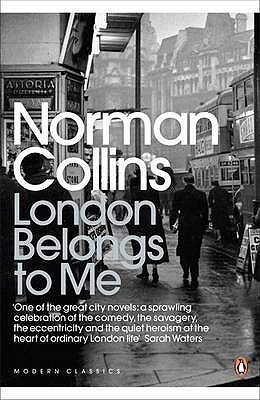 It ended up in my tsundoku pile, unread and nearly forgotten about until long after that relationship ended. When I eventually got round to reading it, I was really pleasantly surprised and charmed by it.
 Set in 1938, the story follows the occupants of 10 Dulcimer Street, Kennington. I found that Collins' conspiratorial writing style really drew me into the minutiae of his characters lives. It feels like you have a tour guide, pulling you by the hand into the front rooms of families and whispering all the gossip into your ear.
In focusing on the lives of the inhabitants of just one house, Collins manages to also encompass lots of imagery and themes of the wider community of London at the time. The war hangs over this book like a character in itself, creeping slowly closer to the daily lives of our friends at 10 Dulcimer Street.
Fox Populi- Kate Fox-2013
.
I know of Kate and her poetry from a couple of stand-up
comedy gigs I have been to which she has performed at. She’s always come across
as warm and funny and personable on stage.
“On the second day I was on the bus
when there was a bang and all the lights went out-
and there was a chorus,
of “Call this an Apocalypse? I felt nowt”.
and “Grimsby hasn’t looked this good since
the Germans redecorated.”
You’ve got to make the best of things,
Northerners are tough like that
nobody else compares."
I'd recommend it to anyone who maybe feels a bit intimidated by reading poetry, as I did.
Hxxx
Bad Pharma
.
I recently wrote a review of Ben Goldacre's latest book, Bad Pharma, for Medical Writing, the journal of the European Medical Writers Association. That review is reproduced below.
By Ben Goldacre, published by Fourth Estate,
2012. ISBN 978-0-00-735074-2 (paperback) 448 Pages. £13.99