I love the way Simon Van Booy uses language, and particularly enjoyed The Secret Lives of People in Love His words sing. But there is a large portion of this book that just didn't work for me.
The prologue is a thing of beauty, and Book One is a heartbreaking joy of beautiful prose and gorgeously flawed characters. Not much happens for most of it, but it's utterly compelling.
Book Two is where my infatuation began to wane. There was a sudden switch from third person to second person narrative. It grated, because "you" is actually "Henry" And instead of making me feel closer to him, it forced a distance that wasn't there in the third person narrative.
It might have worked for me if it was just done for the period of the dramatic event that happened at it's beginning - Henry's shock and disorientation reflected in the way I responded to the change in pronoun - but it continued throughout both Book Two and Book Three and I ceased to care. Until Book Four and a return to third person narrative.
I am almost certain that the jarring disconnect caused by the switch of narrative styles was intentional and it's very cleverly done. But it is cold and calculating where the rest of the story is warm and human and incredibly beautiful.
Showing posts with label love. Show all posts
Everything Beautiful Began After - Simon Van Booy
.

Love In The Time Of Cholera
.
Love In The Time Of Cholera is a Nobel Prize winning novel by Colombian writer Gabriel Garcia Marquez, first published in Spanish in 1985. The book is set in an un-named city on the Caribbean coast over the adult lifespan of the main characters – roughly from the 1880's to the 1930's. It follows the love life of Florentina Ariza, a persistent man of romance, novels and most of all, letters. He falls in love with the other main character of the novel, Fermina Daza, during their early teens; a love that is entirely correspondence and passing at distance at public events. Unfortunately for Senor Ariza (spoiler alert) Ms Daza turns him down and marries a doctor who is prominent in the city. Thus begins the dominant dynamic of the novel – Ariza's decision to devote himself to her, to wait for his opportunity, if he has to wait for her husband to die of old age or accident if necessary. Perhaps surprisingly, Florentina Ariza avails himself of women, sexually and romantically, although he does limit his commitments. As a premise, this might sound like a yawning and protracted essay on unrequited love, and in many ways it is. I found it did swerve dangerously close to a sense of self indulgence, but there is a quality to the writing that never lets the attention drift from the story. It is detailed and clamorous, much like the sweltering days, sticky nights and the fevered passions of the protagonist. Throughout, the novel tests one's sympathies towards the lovelorn Ariza who, despite his total devotion, carries on a life of sexual indulgence that cares little for the feelings and life of those he, effectively, uses. Ariza's archaic, secretive and romantic optimism is established as an opposition to the controlled, dignified and public determinism of Fermina Daza and her husband. As the novel progresses, these two forces and approaches to life each become eroded in the face of time and the impossible progress of age. As time progresses and the characters find themselves aliens in their own city, their own society and to their own bodies, the novel brilliantly takes you from the certainties of their earlier years and their commitments, to the acceptance of time, life and even love. Not an easy novel to get through and appreciate, the style seems almost as monomaniac as the protagonist, but if you can adhere to it as he did you may find a surprising and rewarding denouement.
Harmonic Feedback - Tara Kelly
.
Drea is definitely a person.
That might seem like an odd thing to say, but I have felt let down in the past by books with characters who have ADHD/Aspergers/autism. They either fudge the issue by not naming it or treat the character with autism as an issue to be dealt with.
Don't get me wrong, I have got a lot out of those books. But then I am a parent to two children with varying degrees of autistic spectrum disorders and ADHD; I myself have no diagnosis.
I'm not sure I would want my children to read those books until they are more comfortable in their own skins. Because despite the best of intentions, they "other" them.
I want them to be able to find books that have a character they can identify with, who's like them: a person whose diagnosis or disability is just a part of who they are. Neither good nor bad. This one fits the bill beautifully.
The Book Of Rachael by Leslie Cannold
.
This book transported me to a different time and place. I was there, shyly standing behind Rachael. I was her shadow and her witness, simultaneously cheering her on and worried for her - for her inability to pretend to be what was expected of her as a woman of that place and time.
This is a beautifully written story, it's characters fully fleshed out, flawed individuals.
I fell in love with clever, angry, rebellious Rachael and then fell in love with Judah as seen through her eyes. My heart broke with hers at the injustice done to quiet, obedient Shona. I adored her brother Joshua and father Yosef - both quiet, kind men and honourable in the true sense of the word, rather than the facade of "honour" required by the society and time they inhabit.
I seethed with anger at the injustice that was a fact of life for the women in this story, and cried for Rachael's family - the men as well as the women. I would despair for my two sons if they had to grow up in a society like this.
In short, I loved this book. Read it and enjoy a tale well told. What you take away from it is entirely up to you.
London Belongs To Me- Norman Collins 1945
.
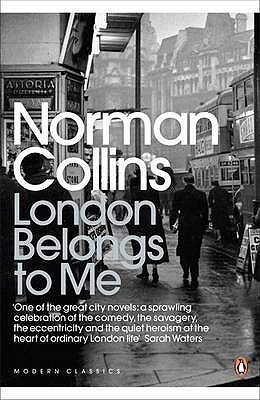 It ended up in my tsundoku pile, unread and nearly forgotten about until long after that relationship ended. When I eventually got round to reading it, I was really pleasantly surprised and charmed by it.
 Set in 1938, the story follows the occupants of 10 Dulcimer Street, Kennington. I found that Collins' conspiratorial writing style really drew me into the minutiae of his characters lives. It feels like you have a tour guide, pulling you by the hand into the front rooms of families and whispering all the gossip into your ear.
In focusing on the lives of the inhabitants of just one house, Collins manages to also encompass lots of imagery and themes of the wider community of London at the time. The war hangs over this book like a character in itself, creeping slowly closer to the daily lives of our friends at 10 Dulcimer Street.
The Girl Who Could Silence The Wind - Meg Medina
.
This is a beautiful story of hope, sacrifice and love. The setting, heroine and elements of "magical realism" all reminded me of Isabel Allende's "Eva Luna" only with fewer individual strands in the story and aimed at a younger audience.
I enjoyed this, but didn't fall in love with it the way I fell in love with Eva Luna. It pales by comparison, which is both unfortunate and unfair to this book. But I can't unread Eva Luna and I can't help my response to it.
The Shock of the Fall - Nathan Filer
.
"I'll tell you what happened because it will be a good way to introduce my brother. His name's Simon. I think you're going to like him. I really do. But in a couple of pages he'll be dead. And he was never the same after that."
This is a beautifully accessible and moving (but definitely NOT mawkish) story about mental illness, grief, guilt, love and family.
I read this in a day, stealing moments to sneak in a chapter here, a paragraph there. It was one of those books I didn't want to put down.
Despite the subject matter, this is not a depressing read. It humanises a condition that is often "monstered" into something to be afraid of, and is by turns poignant, scary, darkly humorous, warm, funny and hopeful.
Jackie
PS - If you want a more in-depth review, check out this, from our very own Sparkle Wildfire